
Category: Papers

Multilayer network science: theory, methods, and applications

Journal of Complex Networks, Volume 14, Issue 2, April 2026, cnag007,

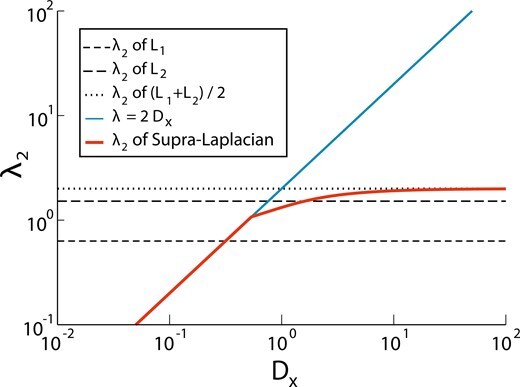
Multilayer network science has emerged as a central framework for analysing interconnected and interdependent complex systems. Its relevance has grown substantially with the increasing availability of rich, heterogeneous data, which makes it possible to uncover and exploit the inherently multilayered organisation of many real-world networks. In this review, we summarise recent developments in the field. On the theoretical and methodological front, we outline core concepts and survey advances in community detection, dynamical processes, temporal networks, higher-order interactions, and machine-learning-based approaches. On the application side, we discuss progress across diverse domains, including interdependent infrastructures, spreading dynamics, computational social science, economic and financial systems, ecological and climate networks, science-of-science studies, network medicine, and network neuroscience. We conclude with a forward-looking perspective, emphasizing the need for standardised datasets and software, deeper integration of temporal and higher-order structures, and a transition toward genuinely predictive models of complex systems.

Read the full article at: academic.oup.com

Complexity in the Twenty-First Century: From the Limits of Growth to the Growth of Limits

Reda Benkirane

Complex Systems, 34(4), 2026 pp. 387–400.

Complexity, a term that is both ambiguous and multifaceted, is used widely today. Various legitimate definitions can be proposed for it, as is the case with “ample” notions such as intelligence, consciousness or culture. The recurrent mention of this term can be attributed to the transformation of our societies and their artifacts, as well as the acceleration of time brought by the digital revolution—a technological upheaval comparable to the invention of writing and the printing press.

Read the full article at: www.complex-systems.com

Integrated information theory: the good, the bad and the misunderstood

Adam B. Barrett, Borjan Milinkovic, Pedro A. M. Mediano, Fernando E. Rosas, Daniel Bor, Lionel Barnett, Anil K. Seth

The integrated information theory of consciousness (IIT) is uniquely ambitious in proposing a mathematical formula, derived from apparently fundamental properties of conscious experience, to describe the quantity and quality of consciousness for any physical system that possesses it. IIT has generated considerable debate, which has engendered some misunderstandings and misrepresentations. Here we address and hope to remedy this. We begin by concisely summarising the essentials of IIT. Given IIT is supposed to apply universally, we do this with reference to an arbitrary patch of matter, as opposed to the usual system of discrete computational units. Then, after briefly summarising IIT’s theoretical and empirical achievements, we focus on five points which we consider especially important for driving forward new theory and increasing understanding. First, a high value of the measure Φ is not synonymous with `more consciousness’. We describe how Φ might be replaced with a suite of quantities to obtain a multi-dimensional characterisation of states of consciousness. Second, we describe with nuance the distinct flavour of panpsychism implied by IIT — whereby space (and time) are tiled with substrates of (proto-) consciousness — and find this is not problematic for the theory. Third, Φ is not well-defined for real physical systems, and has not been computed on any real physical system. Fourth, so far only proxies for IIT measures have been computed, and not approximations. Fifth, for IIT to fit with current successful theories in fundamental physics, a reformulation in terms of continuous fields would be needed.

Read the full article at: arxiv.org

Informal connections outweigh coauthorship ties in academic impact

Lluís Danús, William Dinneen, Carolina Torreblanca, Guy Grossman, and Sandra González-Bailón

PNAS 123 (18) e2511050123

The term “invisible college” refers to communication networks that help scientists exchange information and advance knowledge. These networks create social capital, granting access to resources like new ideas and support. Measuring those intangible exchanges is an empirical challenge. Here we approximate these ties through the analysis of the “thank you” notes appended to journal articles. Our findings show that scholars disconnected from this layer of academic social capital have lower publication impact. We also show that informal ties provide support not captured by coauthorship ties, which reflect a more rigid form of collaboration. Documenting how informal structures of support operate can help leverage collective resources in the pursuit of shared intellectual goals.

Read the full article at: www.pnas.org

Exploring Cultural Evolution Through Modular Dynamics in Temporal Hashtag Networks

Yasuhiro Hashimoto, Hiroki Sato, and Takashi Ikegami

Entropy 2026, 28(4), 398

Social media platforms offer unprecedented opportunities to study cultural evolution by analyzing digital traces. This study presents a methodological framework for analyzing the temporal dynamics of cultural modules in hashtag co-occurrence networks. We address the inherent challenges of analyzing dense, skewed, and highly variable cultural networks by introducing a perturbation ensemble clustering approach that distinguishes stable from unstable structural elements. By applying the Leiden algorithm to a perturbed ensemble of hashtag networks, we identify robust core modules and their stable periphery, and distinguish them from floating elements with unstable associations. Analysis of four years of data from a major photo-sharing platform reveals complex patterns in the evolution of cultural modules, including both stable associations and dynamic reorganizations. Our findings demonstrate how ensemble clustering techniques can effectively capture the interplay between stability and change in evolving cultural systems.

Read the full article at: www.mdpi.com