ROUTING STRATEGIES FOR SUPPRESSING TRAFFIC-DRIVEN EPIDEMIC SPREADING IN MULTIPLEX NETWORKS

JINLONG MA, TINGTING XIANG, and MINGWEI CAI

Advances in Complex Systems Vol. 26, No. 06, 2340005 (2023)

Multiplex networks have proven to be valuable tools for modeling and analyzing real complex system. Extensive work has been done on the traffic dynamics on multiplex networks, but there remains a lack of sufficient attention towards studying routing strategies for the purpose of suppressing epidemic spreading. In this paper, the impact of global awareness routing (GAR), improved global awareness routing (IGAR), and improved active routing (IAR) strategies on traffic-driven epidemic spreading are investigated. Our findings indicate that in the case of infinite node-delivery capacity and no traffic congestion in the network, adjusting routing parameters can effectively suppress epidemic spreading. In this context, these three strategies show better abilities on the multiplex network built by WS or ER model to minimize the density of infected nodes, thus contributing to the overall inhibition of the epidemic spread. However, in the multiplex network constructed by BA model, GAR strategy has a promoting effect on epidemic spreading compared with the shortest routing strategy. In addition, by controlling traffic flow, limiting node delivery capabilities can contain outbreaks. Our results suggest that adopting appropriate routing strategies in multiplex networks can play a proactive role in controlling epidemic spreading. This is crucial for formulating effective prevention and control measures and improving public health security.

Read the full article at: www.worldscientific.com

Drift Diffusion Model to understand (mis)information sharing dynamic in complex networks

Lucila G. Alvarez-Zuzek, Jelena Grujic, Riccardo Gallotti

Sharing misinformation threatens societies as misleading news shapes the risk perception of individuals. We witnessed this during the COVID-19 pandemic, where misinformation undermined the effectiveness of stay-at-home orders, posing an additional obstacle in the fight against the virus. In this research, we study misinformation spreading, reanalyzing behavioral data on online sharing, and analyzing decision-making mechanisms using the Drift Diffusion Model (DDM). We find that subjects display an increased instinctive inclination towards sharing misleading news, but rational thinking significantly curbs this reaction, especially for more cautious and older individuals. Using an agent-based model, we expand this individual knowledge to a social network where individuals are exposed to misinformation through friends and share (or not) content with probabilities driven by DDM. The natural shape of the Twitter network provides a fertile ground for any news to rapidly become viral, yet we found that limiting users’ followers proves to be an appropriate and feasible containment strategy.

Read the full article at: arxiv.org

Imitation vs serendipity in ranking dynamics

Federica De Domenico, Fabio Caccioli, Giacomo Livan, Guido Montagna, Oreste Nicrosini

Participants in socio-economic systems are often ranked based on their performance. Rankings conveniently reduce the complexity of such systems to ordered lists. Yet, it has been shown in many contexts that those who reach the top are not necessarily the most talented, as chance plays a role in shaping rankings. Nevertheless, the role played by chance in determining success, i.e., serendipity, is underestimated, and top performers are often imitated by others under the assumption that adopting their strategies will lead to equivalent results. We investigate the tradeoff between imitation and serendipity in an agent-based model. Agents in the model receive payoffs based on their actions and may switch to different actions by either imitating others or through random selection. When imitation prevails, most agents coordinate on a single action, leading to non-meritocratic outcomes, as a minority of them accumulates the majority of payoffs. Yet, such agents are not necessarily the most skilled ones. When serendipity dominates, instead, we observe more egalitarian outcomes. The two regimes are separated by a sharp transition, which we characterise analytically in a simplified setting. We discuss the implications of our findings in a variety of contexts, ranging from academic research to business.

Read the full article at: arxiv.org

THE 4TH INTERNATIONAL CONFERENCE ON EMBODIED INTELLIGENCE

TO BE HELD ONLINE ON MARCH 20-22, 2024

This FREE event brings together a wide range of speakers to discuss the many challenges and opportunities in Embodied Intelligence research! The workshop is structured with a morning session and afternoon session each day to accommodate different time zones. Each session includes plenary talks, panel discussions (including flash talks by leading researchers), and breakout sessions as shown in the tentative programme here. While plenary and panel speakers are invitation-only, we solicit wider contributions in breakout sessions to facilitate more focused and technical discussions.

Register at: embodied-intelligence.org

Account credibility inference based on news-sharing networks

Bao Tran Truong, Oliver Melbourne Allen & Filippo Menczer
EPJ Data Science volume 13, Article number: 10 (2024)

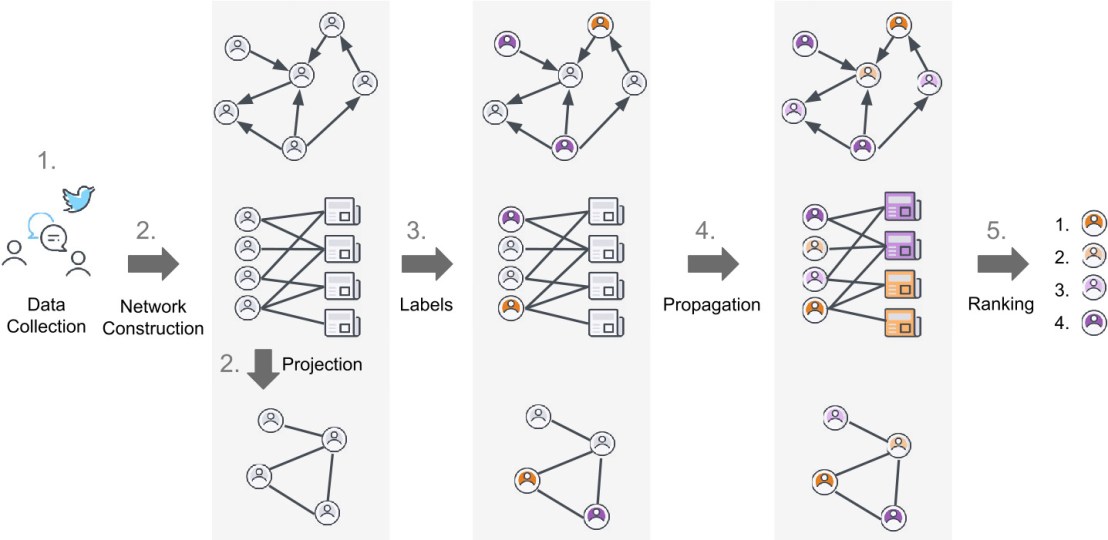
The spread of misinformation poses a threat to the social media ecosystem. Effective countermeasures to mitigate this threat require that social media platforms be able to accurately detect low-credibility accounts even before the content they share can be classified as misinformation. Here we present methods to infer account credibility from information diffusion patterns, in particular leveraging two networks: the reshare network, capturing an account’s trust in other accounts, and the bipartite account-source network, capturing an account’s trust in media sources. We extend network centrality measures and graph embedding techniques, systematically comparing these algorithms on data from diverse contexts and social media platforms. We demonstrate that both kinds of trust networks provide useful signals for estimating account credibility. Some of the proposed methods yield high accuracy, providing promising solutions to promote the dissemination of reliable information in online communities. Two kinds of homophily emerge from our results: accounts tend to have similar credibility if they reshare each other’s content or share content from similar sources. Our methodology invites further investigation into the relationship between accounts and news sources to better characterize misinformation spreaders.

Read the full article at: epjdatascience.springeropen.com